

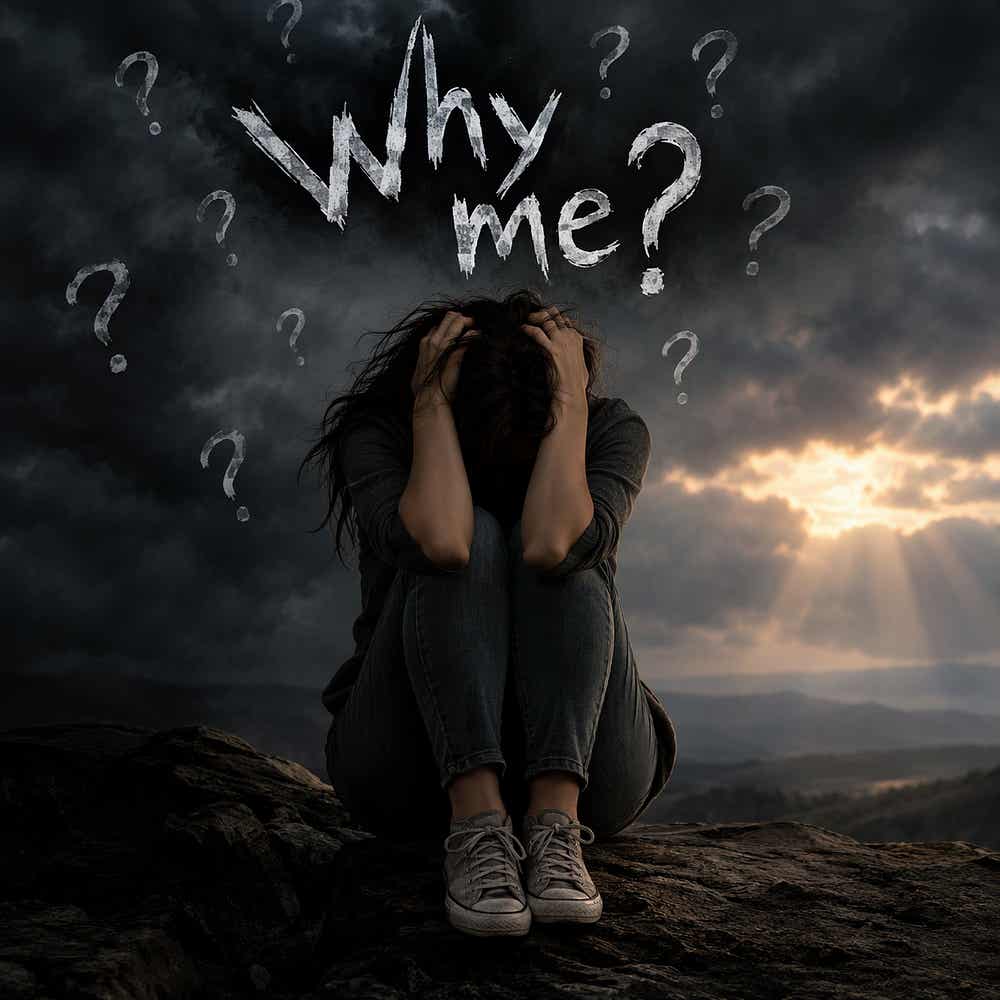
Why Me?

Originally published on Gimme Some Torah by Rabbi Eli Garfinkel on November 12, 2026.
וַיִּתְרֹֽצְצ֤וּ הַבָּנִים֙ בְּקִרְבָּ֔הּ וַתֹּ֣אמֶר אִם־כֵּ֔ן לָ֥מָּה זֶּ֖ה אָנֹ֑כִי וַתֵּ֖לֶךְ לִדְרֹ֥שׁ אֶת־יְהֹוָֽה׃
But the children struggled in her womb, and she said, “If so, why do I exist?” She went to inquire of GOD,
Distraught over her discomfort in pregnancy, Rebecca plaintively asks, אִם־כֵּן לָמָּה זֶּה אָנֹכִי (im ken lamma zen anokhi), which the JPS translation renders as, “If so, why do I exist?”
Both Ibn Ezra and Radak (bio) wrote that Rebecca was asking, “If all these other women have not experienced this kind of pain, why do I?” Radak says it more explicitly:
After she felt these strange movements, she asked other women who were pregnant or who had born children if they too had experienced such a phenomenon. After they all denied ever having experienced such feelings, she burst out asking: אִם־כֵּן לָמָּה זֶּה אָנֹכִי, why should such a thing be reserved for me?
It is very common for people in a state of acute distress to ask, “Why me?” I learned to ask a different question from the memoir “When Breath Becomes Air,” by the late Stanford neurosurgeon Dr. Paul Kalanithi. His widow, Lucy Kalanithi summarized his point in an article about the book:
Such graceful handling of the existential — “Paul didn’t ask ‘Why me?’” she said; “He would say ‘Why not me?’” — helped the couple get his posthumously published memoir, When Breath Becomes Air, examining the thin, raw layers that exist between life and death, out into the world where it would become a New York Times bestseller and inspiration to many.
Dr. Kalanithi died at the age of 37 of metastatic lung cancer. He had every right to be bitter about his diagnosis. After all, he was on a road to greatness, having received his bachelor’s degree from Stanford and his medical degree from Yale. At Stanford, he became one of the nation’s foremost researchers in optogenetics, a field so complex that I will not describe it for fear of embarrassing myself. His daughter Elizabeth was eight months old when he died. On top of all that, he never smoked.
Even so, he was able to ask, “Why not me?” Only a wise and humble person could ask such a question. When we ask “Why not me?” we are confessing our belief that we are not special, that we are not immune to life’s tribulations, and that we are not deserving of a better fate.
Dr. Kalanithi understood that, as a human being, he had no right to expect or demand a tragedy-free, golden life. He probably also understood that he owed a debt of gratitude for all the blessings that he did receive.
The world is certainly a poorer place without Dr. Kalanithi. It is not fair that he died while horrible rapists and murderers get to live. But the question “Why not me?” answers that unfairness with humility and grace.
•••
Rabbi Eli L. Garfinkel is the Senior Rabbi of Temple Beth El in Somerset, NJ.
Would you like to study with me in person? Contact Kal Miller.
Kosher Duck Revolution is an initiative of AIC. Join AIC. Membership starts at $9 a month.