

run a drop

for teachers and youth leaders

Run a duck drop.

Twenty ducks, a room full of kids, and about an hour. Here's how it actually goes, and what to print before it does.

Found ducks at school — Seattle, Washington, USA

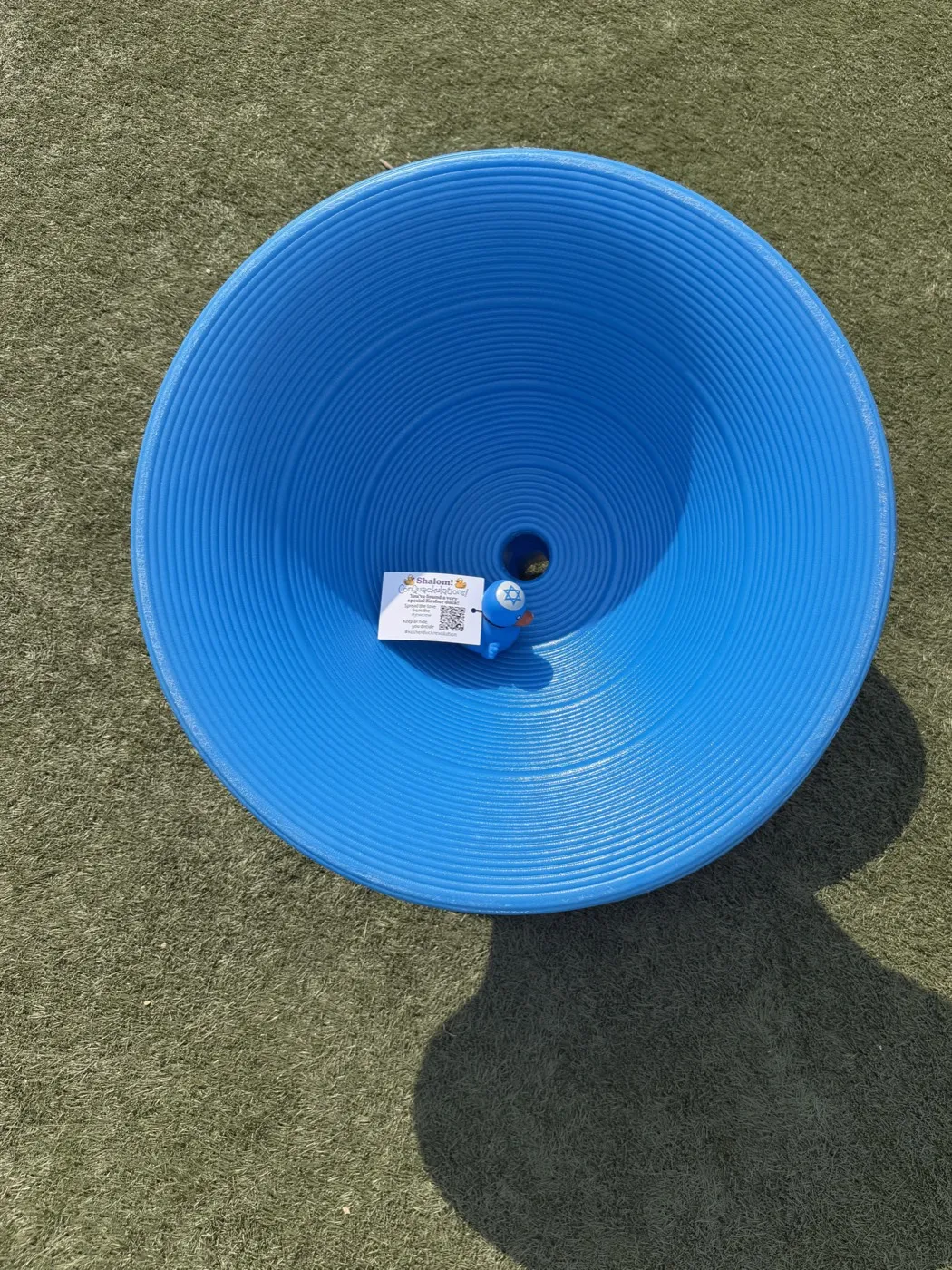
I am a Jewish teacher at a shul. We hid some for the kids to find at our open house around the building and playground. It was a special day for all.

Seattle, Washington, USA

That's a real note from the map. A shul open house, ducks around the building and the playground. A drop is twenty small hiding places and a room that doesn't know yet.

how it goes

Hide it, find it, pass it on.

It's the same three beats every Quacker runs, scaled up to a room. You do the first one before anyone arrives, the kids do the second, and the third is what keeps the ducks moving after everyone goes home.

1

Hide it

Walk the space before anyone arrives and tuck the ducks where a person would grin to find one — a bookshelf, a coat hook, the lip of a water fountain. Write down where each one went as you go. That sheet is in the kit below, and it is the difference between a clean finish and a search for duck number nine.

2

Find it

Give the room the boundaries — which floors, which doors, how many ducks — and let them go. Every duck carries a tag with a QR code, and the tag is the finder’s to keep: it says what they found and where the map lives. Plan for about fifteen minutes of hunting, and for the room to get loud.

3

Pass it on

A found duck belongs to the kid who found it. They can keep it or hide it again somewhere else, which is how a duck from a Tuesday classroom ends up as a map pin three states over.

An hour is a comfortable slot: time to hide before anyone arrives, time to hunt, and the rest for the part where everyone shows each other what they got. If the room is big or the group is small, hide fewer and say so out loud — a hunt that ends with ducks still out there ends flat.

when the room clears

One grown-up submits for the room.

The kids find the ducks; you post the sightings afterwards. It keeps the map tidy, and it means nobody under 13 is uploading photos — which is our rule, and a good one.

Take a few photos while they hunt, or hand your phone to whoever is nearest. Then post one sighting for the whole drop once it's over. A single good photo with your city on it does more for the map than twenty separate ones.

Post a sighting →

before the day

Print the kit.

Two sheets on ordinary paper: a hiding grid with a line per duck, and a poster for the wall. Set the count and the space and the sheets redraw to match. Nothing here is saved — close the tab and it goes back to twenty.

Two sheets. Print in color if you have it; black and white loses nothing.

Sheet 1 of 2 · keep this one

Where the ducks went

20 ducks · A whole building

Date Led by

One line per duck. Write the spot as you hide it, and tick the box when that one has been found.

  1. 1
  2. 2
  3. 3
  4. 4
  5. 5
  6. 6
  7. 7
  8. 8
  9. 9
  10. 10
  11. 11
  12. 12
  13. 13
  14. 14
  15. 15
  16. 16
  17. 17
  18. 18
  19. 19
  20. 20
  21. 21
  22. 22
  23. 23
  24. 24
  25. 25
  26. 26
  27. 27
  28. 28
  29. 29
  30. 30

Spots worth considering

  • Bookshelves
  • Cubbies
  • The windowsill
  • Under a chair
  • The supply cabinet
  • The lobby
  • Coat racks
  • Stairwell landings
  • The library
  • Outside the office
  • The lobby
  • Sanctuary doors
  • The playground fence
  • Picnic tables
  • The garden
  • The welcome table
  • Under chairs
  • The dessert table
  • By the doors
  • The stage steps

Sheet 2 of 2 · for the wall

Wall poster

You'll need ducks.

The Community Duck Pack is ten kosher ducks for $120, each with the tag and QR code that sends its finder to the map. Two packs is the twenty this page is built around; a third takes you to thirty, which is where the kit tops out.

Try

to move to openesc to close