

Why Did Rebecca Ask that Question?

Originally published on Gimme Some Torah by Rabbi Eli Garfinkel on November 11, 2026.
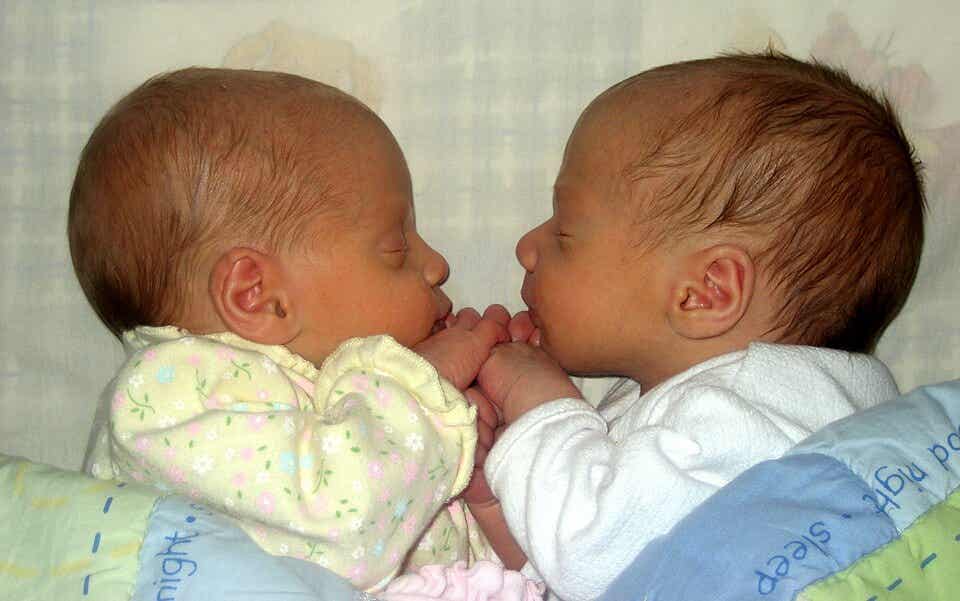
Fraternal twins (photo link)
וַיִּתְרֹֽצֲצ֤וּ הַבָּנִים֙ בְּקִרְבָּ֔הּ וַתֹּ֣אמֶר אִם־כֵּ֔ן לָ֥מָּה זֶּ֖ה אָנֹ֑כִי וַתֵּ֖לֶךְ לִדְרֹ֥שׁ אֶת־יְהוָֽה׃
But the children struggled in her womb, and she said, “If so, why do I exist?” She went to inquire of GOD,

Why did Jacob and Esau fight in utero? Rashi quotes a well-known midrash in his answer:
Our Rabbis explain that the word וַיִּתְרֹֽצֲצ֤וּ (vayitrotz’tzu) has the meaning of running, moving quickly: whenever she passed by the doors of the Torah (i. e. the Schools of Shem and Eber), Jacob moved convulsively in his efforts to come to birth, but whenever she passed by the gate of a pagan temple Esau moved convulsively in his efforts to come to birth (Gen. Rabbah 63:6).
Why, then, did Rebecca inquire of God, “If so, why do I exist?” What was so traumatic about her pregnancy that she would ask such a dramatic question? I’m always attracted to answers that I have never heard before, and here’s one from the Ishbitzer Rebbe, Rabbi Mordecai Leiner (bio), who wrote Mei HaShiloaḥ:
SHE WENT TO INQUIRE OF HASHEM: Rashi’s interpretation is that she wanted to know her destiny. As we’ve heard taught in the name of the Holy Rabbi of Peshisḥa, of blessed memory, Rebecca thought that she was pregnant with only one baby, and that it was a baby with cyclical personality. That is, the fetus was sometimes attracted to good, (i.e. when she passed by a house of Torah), and sometimes to evil, (i.e when she passed by a pagan temple). And this is why she inquired of God—she wanted to know if everything in the end would turn out for the best (See P’ri Tzaddik, Vayeḥi 2).
I think the Ishbitzer Rebbe’s point here is that Rebecca naively thought all people are either one or the other, good or evil. She was confused, therefore, that her one baby seemed to attracted to both.
After her twins were born and grown, Rebecca may have learned that all people are a complex mixture of good and wicked impulses. She even discovered that both she and Jacob were a mixture of good and bad, such as when they collaborated to steal Esau’s paternal blessing or when Jacob took advantage of his brother’s hunger to buy his birthright. (I’m not saying that either was a wicked thing to do, but they weren’t altogether good, either. They were necessary but morally complicated acts like just wars.)
It is not strange that a human being would be attracted to both poles of morality—it’s completely normal. The question, which must be asked daily, is which impulse will win out.
•••
Kosher Duck Revolution is an initiative of AIC. Join AIC. Membership starts at $9 a month.