

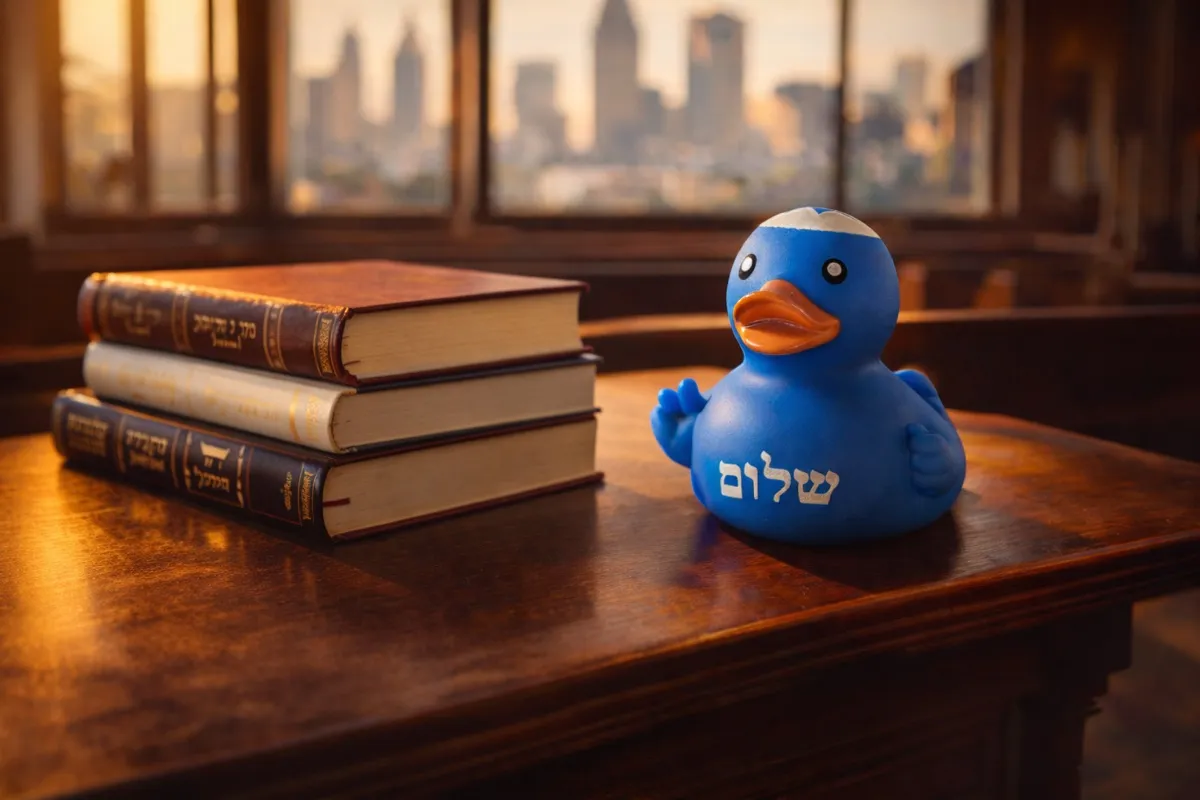
Bears and Lions

Tuesday night we went to an October 7 concert at a theater here in town. It was more moving than I expected. Honestly, it was very hard to sit through, and it was still very much worth going.
About a hundred people came. For a town this size, on a weeknight, that’s a lot. Several elected officials were there, Democrats among them, and with everything going on in that party lately, I was glad to see them. People from other faiths came too. Mormons, Christians, and others. Nobody made them come.
And then there was the security. I’m not going to describe it. It was crazy, for a concert, and it’s the thing that annoyed me most all week.
This Shabbat we read Noach, and it turns out the ark had a security detail too.
When the last of the animals are on board, the Torah says:
וְהַבָּאִ֗ים זָכָ֨ר וּנְקֵבָ֤ה מִכׇּל־בָּשָׂר֙ בָּ֔אוּ כַּֽאֲשֶׁ֛ר צִוָּ֥ה אֹת֖וֹ אֱלֹהִ֑ים וַיִּסְגֹּ֥ר יְהֹוָ֖ה בַּֽעֲדֽוֹ׃
Thus they that entered comprised male and female of all flesh, as God had commanded him. And GOD shut him in.
Noah doesn’t close his own door. God does it for him, and Noah stays shut in there for about a year.
Rashi gives two readings. The plain one is that God shut the door against the water. The other one he takes from the midrash. The people of that generation came to smash the ark open, so God surrounded it with bears and lions, and the bears and lions killed some of them.
So the first boat full of survivors in the Torah had bears and lions around it. I didn’t see any lions on Tuesday. It wasn’t far off.
Rashi adds a note about one word. The Hebrew for “him” in that verse is ba’ado. Rashi says that everywhere in Tanakh, ba’ad means in front of, or on behalf of, and he lists the verses to prove it. Iyov’s “skin for skin.” The people begging Shmuel to pray on their behalf. The psalm that says magen ba’adi, a shield in front of me. When God shuts Noah in, God is standing in front of him.
Then the water goes down, everyone comes off the boat, and God makes a promise. It’s made with Noah and his sons, and it reaches a lot further than the family:
וְהָיְתָ֥ה הַקֶּ֖שֶׁת בֶּֽעָנָ֑ן וּרְאִיתִ֗יהָ לִזְכֹּר֙ בְּרִ֣ית עוֹלָ֔ם בֵּ֣ין אֱלֹהִ֔ים וּבֵין֙ כׇּל־נֶ֣פֶשׁ חַיָּ֔ה בְּכׇל־בָּשָׂ֖ר אֲשֶׁ֥ר עַל־הָאָֽרֶץ׃
When the bow is in the clouds, I will see it and remember the everlasting covenant between God and all living creatures, all flesh that is on earth.
All living creatures. All flesh. This is the one covenant in the Torah that’s made with everybody. The rabbis call every person who isn’t Jewish a ben Noach, a child of Noah, and they hang seven laws on this covenant. Don’t murder. Don’t steal. Set up courts. A few more. It’s a short list, and it’s what God asks of the whole world.
And look at who the rainbow is for. “I will see it and remember.” God is the one being reminded. And God puts the reminder in the sky, where anyone can see it, whether or not they’ll ever open a Torah.
The rainbow is a bow, by the way. The kind you shoot arrows with. God calls it kashti, my bow. Ramban passes along an explanation he found in other commentators: God didn’t set it with its ends pointing up, because then it would look like somebody in heaven was shooting at the earth. The ends point down, the way soldiers turned their weapons around when they called out to the other side for peace. And there’s no string on it.
Then Ramban does something you might not expect from a thirteenth-century rabbi. He says he has no choice but to believe the Greeks that a rainbow is just sunlight in wet air, since you can see one in a bowl of water standing in the sun. Fine, he says. It was there from the beginning, and from this day on it means something.
An October 7 concert is a room full of people who decided to remember. Most of the people in that room were Jews. Some weren’t, and they came out on a Tuesday night to sit through something very hard, for us. I’d call that ba’ado too.
Friday night, and again on Shabbat morning, my husband and I stayed after services for kiddush and sat with whoever was at the table. Some of them were Russian Jews. The stories you hear, even here, are amazing. I’m not going to tell them. They’re theirs, and nobody told me one for a column.
Noach ends at Babel. The whole world speaks one language, they build a tower, and God confounds the speech of the whole earth, and “from there GOD scattered them over the face of the whole earth” (Bereshit 11:9).
People have been scattered ever since. Some of them end up at a kiddush table in a shul that is itself four congregations folded into one. Babel ends with everyone going their separate ways. At kiddush, people who came from all over sit down at one table and talk. We did it twice in one weekend.
Shabbat shalom.
— Uriel ben Avraham
Kosher Duck Revolution is an initiative of AIC. Join AIC — membership starts at $9 a month.