

When You Are Away
Athens has a kosher burger restaurant called King David Burgers. We found it on our layover — a day and a half between Tel Aviv and Atlanta, the ancient city filling the gap between the land we’d just left and the home we hadn’t reached yet.
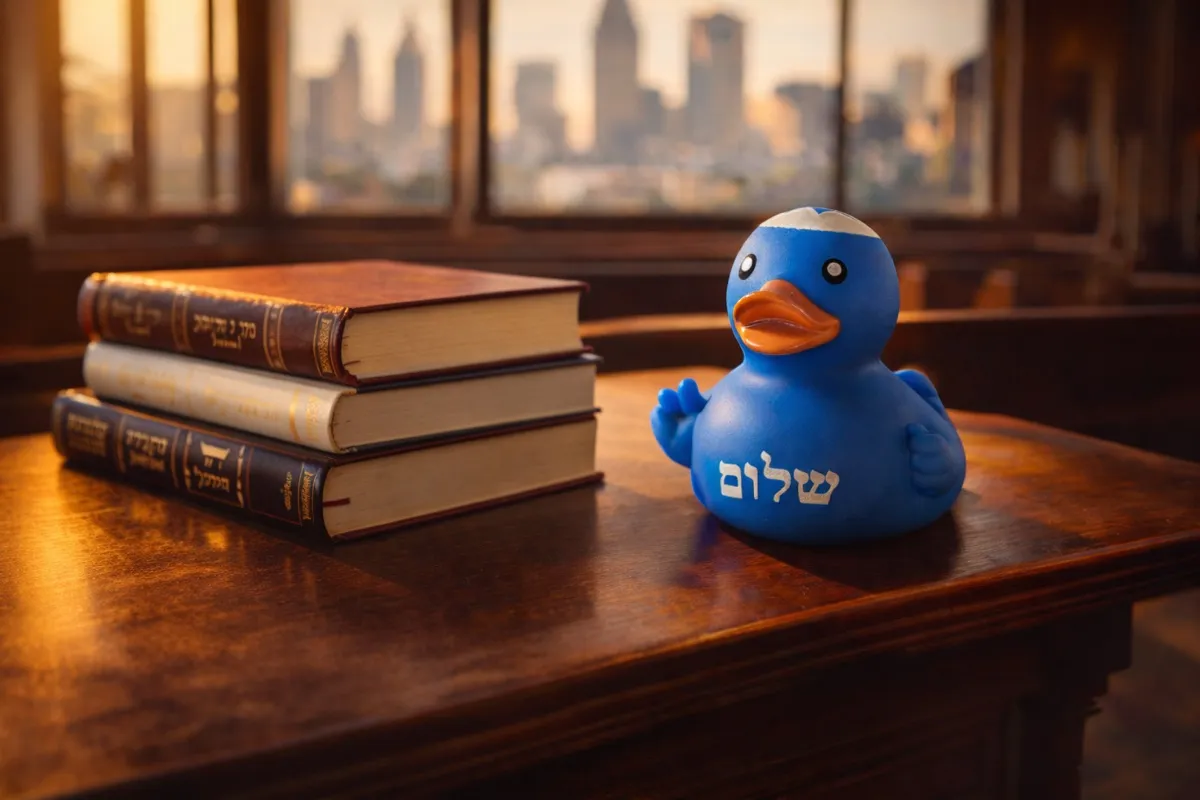
We walked up, ordered, and there on a shelf behind the counter sat two rubber ducks. Kosher Ducks. From this website. Somehow, before we arrived, someone had brought them to the shop. The lady behind the counter told us the person who left them had done so in solidarity after the restaurant was attacked — targeted for being a kosher business. Two small, absurd reminders that the community persists.
I sat with my burger and thought about that for a while.
Athens was a bucket list destination. The Acropolis delivered — pale stone, blue sky, twenty-five centuries of engineering holding its shape against the heat. The streets told a different story. Graffiti we’d rather not have read. Looks we’d rather not have gotten. A general atmosphere that made two men in kippot walk a little faster. We checked the box. We have no desire to go back.
The parsha this Shabbat is Va’etchanan — “and I pleaded” — the second portion in Deuteronomy. Moses is still on the eastern bank of the Jordan, still speaking to a people he will not accompany across.
וָאֶתְחַנַּ֖ן אֶל־יְהֹוָ֑ה בָּעֵ֥ת הַהִ֖וא לֵאמֹֽר׃
I pleaded with GOD at that time, saying,
Va’etchanan. The root is chen — grace, an unearned gift. Moses, despite everything he had done, didn’t claim entry to the land as something owed. He asked for grace. God said no. We covered that refusal last week.
But Va’etchanan doesn’t stay with the refusal. It moves forward. And what it moves into is the most important paragraph in Jewish life.
שְׁמַ֖ע יִשְׂרָאֵ֑ל יְהֹוָ֥ה אֱלֹהֵ֖ינוּ יְהֹוָ֥ה ׀ אֶחָֽד׃
Hear, O Israel! The ETERNAL is our God, the ETERNAL alone.
The Shema. Six Hebrew words. First thing a Jewish child learns. Last thing said before death. Recited morning and evening, every day, in synagogues and bedrooms and bomb shelters. The rabbis built an entire architecture of prayer around these verses.
Three lines later:
וְשִׁנַּנְתָּ֣ם לְבָנֶ֔יךָ וְדִבַּרְתָּ֖ בָּ֑ם בְּשִׁבְתְּךָ֤ בְּבֵיתֶ֙ךָ֙ וּבְלֶכְתְּךָ֣ בַדֶּ֔רֶךְ וּֽבְשׇׁכְבְּךָ֖ וּבְקוּמֶֽךָ׃
Impress them upon your children. Recite them when you stay at home and when you are away, when you lie down and when you get up.
When you stay at home. When you are away.
The tradition was built for this. Not for the Temple, which would be destroyed. Not for the land, which would be lost and regained and lost and regained again.
The Shema was engineered for portability. Say these words in your house. And say them when you don’t have one.
We left Israel on Tisha B’Av — the saddest day on the Jewish calendar, the day that commemorates exile itself. That night, in an Athens Airbnb apartment, we said the Shema before bed.
The same words we had said in Jerusalem days earlier. The same words we say at home in Atlanta every night.
The city outside was beautiful and old and, for us, unfriendly. We had walked past enough graffiti and drawn enough stares to know that being visibly Jewish here came at a price. We are not naive about Jew-hate in Europe. But experiencing it in person, sharpens the knowledge into something physical. The threats we faced in Israel were real but different. It felt — even amidst the sprints to the shelters — safer.
That same week, while we were in transit, nearly two thousand Jewish teenagers from six countries gathered in Pittsburgh for the JCC Maccabi Campus Games — the largest Jewish youth sporting event in the world, hosted on a college campus for the first time in the event’s history.
The Games opened on Tisha B’Av itself, on the day the calendar says mourn. Two thousand kids showed up to swim and play basketball and dance and be loudly, publicly, unapologetically Jewish. On a campus. In 2025.
The Shema in a hotel room in Athens. Two thousand teenagers in Pittsburgh. Rubber ducks in a burger shop, left by someone in the wake of an attack.
The tradition says: recite these words when you are away. People keep doing it.
This Shabbat is Shabbat Nachamu — the Shabbat of Comfort — named for the haftarah from Isaiah:
נַחֲמ֥וּ נַחֲמ֖וּ עַמִּ֑י יֹאמַ֖ר אֱלֹהֵיכֶֽם׃
Comfort, oh comfort My people,
Says your God.
Nachamu. The first word spoken after the mourning of Tisha B’Av. Seven weeks of consolation haftarot begin here, leading all the way to Rosh Hashanah.
The tradition places this parsha — with the Shema, with the instruction to carry the words everywhere — right after the lowest point on the calendar.
The comfort isn’t that exile ends. Jewish history would be simpler if it were. The comfort is that the words don’t change.
The Shema said in a Jerusalem apartment and the Shema said in a city where you feel watched — same six words.
The tradition doesn’t require a Temple or a homeland to function. It was designed for the moments when you have neither. And when you have both, you say the same words, and the gratitude is sharper for knowing the difference.
We got home to Atlanta in August. The heat familiar, the house intact. That night, in our own room for the first time in weeks, we said the Shema.
Same words. Same cadence. Jerusalem, Athens, Atlanta.
When you stay at home. When you are away. When you lie down.
Shabbat shalom.
— Uriel ben Avraham
Kosher Duck Revolution is an initiative of AIC. Join AIC. Membership starts at $9 a month.