The Broken Letter
Yesterday, I stood in a metal workshop near the Gaza border and watched a man make art. Out of a rocket.
Yaron Bob lives in Moshav Yated — a tiny community about a mile from both Gaza and Egypt. His studio is filled with the remains of dozens (if not more) of Kassam rockets, Iron Dome interceptors, Iranian Ballistic Missiles, and whatever other debris of war the police bring him after the bomb squad clears it.
He heats the metal. He hammers it on an anvil. He shapes it. Sometimes petal by petal, into a rose. Also menorahs, mezuzot, musical instruments. One of his sculptures plays Hatikvah.
He didn’t want to touch the rockets at first. They were instruments of death. But after two close calls — one landed just meters from him — he decided he needed to make something from the metal that had tried to kill him. So he made roses.
Our volunteer group from the Atlanta Israel Coalition stood in Yaron’s workshop and watched him work. Furnace, anvil, hammer, hands. The metal does not cooperate easily. It resists.
The parsha this Shabbat is Pinchas, and it opens with a covenant that arrives in a strange package.
At the end of last week’s parsha, Pinchas — grandson of Aaron the high priest — committed an act of violent zealotry. He killed two people with a single thrust of a spear. The details are awful. The act stopped a plague that had already killed twenty-four thousand.
לָכֵ֖ן אֱמֹ֑ר הִנְנִ֨י נֹתֵ֥ן ל֛וֹ אֶת־בְּרִיתִ֖י שָׁלֽוֹם׃
Say, therefore, ‘I grant him My pact of friendship.
Brit shalom — a covenant of peace. Granted to a man who just committed an act of extraordinary violence. The Torah does not explain the paradox.
But the scribes who copied the Torah for generations noticed something. In every Torah scroll, the word שלום — shalom, peace — in this verse is written with a broken letter. The vav, the vertical stroke in the middle of the word, has a crack running through it. The letter is split but not severed. Still legible.
The word still reads “shalom.” But the break is mandated — scribes are required to write it that way.
Commentators have debated why for centuries. Some say it teaches that peace, even divinely granted, is never fully whole after violence. Others read it as a reminder that the covenant is contingent on wholeness of character. Others connect the fracture to the fracture in the community itself — twenty-four thousand dead, and the repair begins with a cracked letter.
I don’t know which reading is right. I do know that a man in Yated has been hammering broken metal into art, and its stunning, and yet you can still sort of tell they used to be rockets.
The parsha doesn’t stay with Pinchas. After the covenant, after a new census, the text arrives at five women who did something no one had done before.
The daughters of Zelophehad — Mahlah, Noah, Hoglah, Milcah, and Tirzah — come forward. Their father died in the wilderness. He had no sons. Under the existing rules, his name and his share of the land would simply disappear. So the five sisters walk up to Moses, Eleazar the priest, the chieftains, and the entire assembly at the entrance of the Tent of Meeting and make their case:
לָ֣מָּה יִגָּרַ֤ע שֵׁם־אָבִ֙ינוּ֙ מִתּ֣וֹךְ מִשְׁפַּחְתּ֔וֹ כִּ֛י אֵ֥ין ל֖וֹ בֵּ֑ן תְּנָה־לָּ֣נוּ אֲחֻזָּ֔ה בְּת֖וֹךְ אֲחֵ֥י אָבִֽינוּ׃
Let not our father’s name be lost to his clan just because he had no son! Give us a holding among our father’s kinsmen!”
Moses takes the question to God. And God answers:
כֵּ֗ן בְּנ֣וֹת צְלׇפְחָד֮ דֹּבְרֹת֒ נָתֹ֨ן תִּתֵּ֤ן לָהֶם֙ אֲחֻזַּ֣ת נַחֲלָ֔ה בְּת֖וֹךְ אֲחֵ֣י אֲבִיהֶ֑ם וְהַֽעֲבַרְתָּ֛ אֶת־נַחֲלַ֥ת אֲבִיהֶ֖ן לָהֶֽן׃
“The plea of Zelophehad’s daughters is just: you should give them a hereditary holding among their father’s kinsmen; transfer their father’s share to them.
Ken. Right. Correct. The law changes on the spot. Five women who refused to be erased walked into the most powerful assembly in Israel and the system bent to accommodate what was true.
Rashi says their eyes saw what Moses’s eyes did not see. The person closest to the problem saw the solution first.
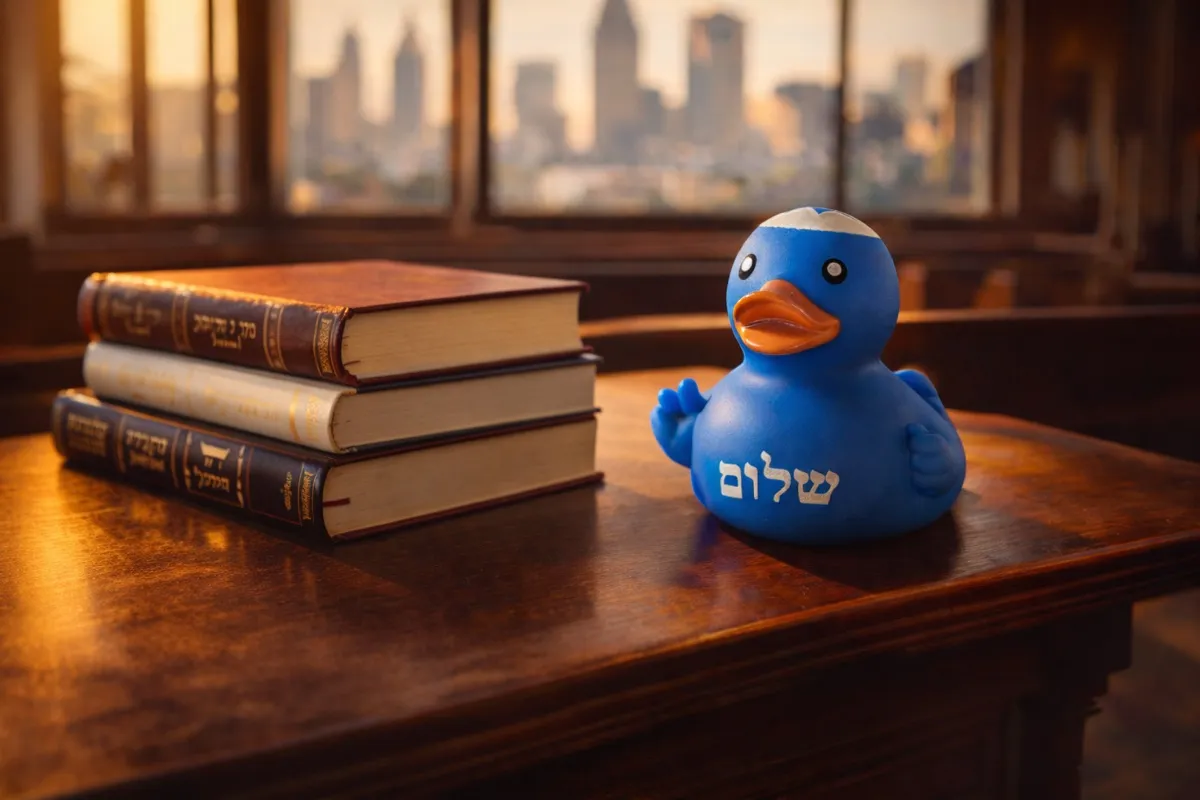
This week, our group fanned out across Israel with everything you — our donors and supporters — helped us carry. At Hadassah Medical Center on Tuesday, we moved room to room through the children’s ward, handing out toys and coloring books and rubber ducks. A child clutched one of the Kosher Ducks and grinned. Her mother whispered something to us — thank you for bringing joy. That was the whole sentence.
Wednesday we toured communities in Judea and Samaria and then drove to an IDF base where we served nearly two hundred soldiers fresh meals alongside our partner, the Binyamin BBQ Brigade. Burgers, smoked meats, sides, desserts. The soldiers kept thanking us and we kept telling them to stop — we were there for them, not the other way around. One soldier, the one who drove us home, told us his wife was expecting their first child the next morning. We loaded him up with toys and ducks and sent him off with more handshakes than any one person should have to endure.
Thursday: Yaron Bob’s workshop and the roses. Then the Nova memorial site, where we stood for a few minutes in silence. Then Shuva Achim, stocking shelves and preparing meals for soldiers coming in and out of Gaza. Then the Michael Levin Base, delivering supplies for lone soldiers — young people who moved to Israel to serve, without family in the country.
Every stop this week had something in common with the daughters of Zelophehad. Someone saw a gap — in supplies, in morale — and walked forward to fill it. No one waited for permission. No one waited for the conditions to improve.
The broken vav in the word shalom. A covenant of peace written with a fractured letter. The scribes could have smoothed it over. They didn’t. They insisted on the crack.
I think the tradition understood something that Yaron Bob’s roses also understand.
Peace forged from the material of war doesn’t arrive unblemished. It arrives carrying the memory of what it used to be. The metal remembers being a rocket. The letter remembers being whole. The covenant holds anyway.
Tonight will be spent in Jerusalem. Candles, wine, bread. The ordinary architecture of rest. A cracked letter, still spelling a whole word.
Shabbat shalom.
— Uriel ben Avraham
Kosher Duck Revolution is an initiative of AIC. Join AIC. Membership starts at $9 a month.