
Counted by Name
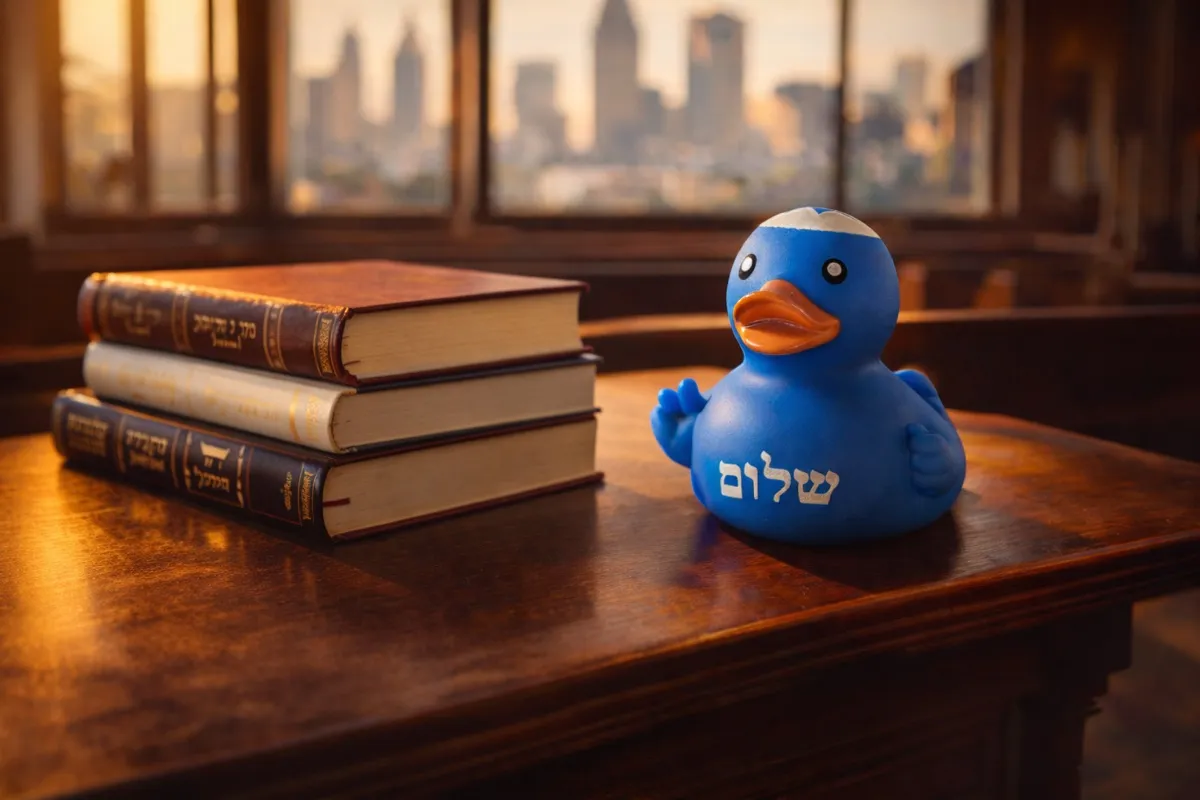
There is a craft supply shop on a side street near Levinsky Market in south Tel Aviv that sells, among other things, tiny metal charms. Stars of David, hamsas, pomegranates, little menorahs — all about the size of a thumbnail, meant to be strung on necklaces or attached to keychains or, in this case, used to “kasher” rubber ducks. I spent a Friday morning sorting through bins of them, picking out charms for a friend back in Atlanta who makes the handcrafted Kosher Ducks for this very website—or at least until the ones she is having manufactured get delivered.
Levinsky Market is the kind of place that resists tidiness. Spice shops next to Eritrean groceries next to stores selling cheap luggage next to a place with what they say are the best burekas in the city (I personally think that those are found at a particular spot in Carmel Market).. Everyone is going somewhere fast. Nobody cares about having a quiet moment with some charms. Things are bustling.
The parsha this Shabbat is Bamidbar — “In the Wilderness” — the opening of the fourth book of Torah. In English the book is called Numbers, because it begins with a count. God speaks to Moses in the wilderness of Sinai and gives the instruction:
שְׂא֗וּ אֶת־רֹאשׁ֙ כׇּל־עֲדַ֣ת בְּנֵֽי־יִשְׂרָאֵ֔ל לְמִשְׁפְּחֹתָ֖ם לְבֵ֣ית אֲבֹתָ֑ם בְּמִסְפַּ֣ר שֵׁמ֔וֹת כׇּל־זָכָ֖ר לְגֻלְגְּלֹתָֽם׃
Take a census of the whole Israelite community by the clans of its ancestral houses, listing the names, every male, head by head.
Se’u et rosh — the Hebrew for “take a census” — literally means “lift up the head.” The people aren’t tallied. They are elevated, one at a time. B’mispar shemot — by the number of names. Each person counted individually, by name, by family, by tribe.
Rashi, the great commentator, asks the obvious question. Why does God keep counting the Israelites? This is at least the third census since the Exodus. His answer is one sentence. “Because they are dear to Him, He counts them now and then.” You count what you love. A parent counting children at a rest stop. A collector checking the shelf. God in the wilderness, lifting heads.
After the count, the parsha does something I didn’t expect the first time I read it. It maps the camp. Each tribe gets a position — Judah to the east, Reuben to the south, Ephraim to the west, Dan to the north — all arranged around the Tent of Meeting at the center:
אִ֣ישׁ עַל־דִּגְל֤וֹ בְאֹתֹת֙ לְבֵ֣ית אֲבֹתָ֔ם יַחֲנ֖וּ בְּנֵ֣י יִשְׂרָאֵ֑ל מִנֶּ֕גֶד סָבִ֥יב לְאֹֽהֶל־מוֹעֵ֖ד יַחֲנֽוּ׃
The Israelites shall camp each [household] with its standard, under the banners of their ancestral house; they shall camp around the Tent of Meeting at a distance.
Ish al diglo — each person under their banner. You are counted, you are named, and then you are placed. Everyone has a spot in the camp.
Earlier this week was Yom Yerushalayim — Jerusalem Day — marking the anniversary of the city’s reunification in 1967. I was in Tel Aviv, but the flags were everywhere. On balconies, on cars, in the hands of thousands marching through the Old City toward the Kotel. Monday the whole city was there, facing the same center. The camp arrangement in Bamidbar — tribes positioned around the Tent of Meeting, everything oriented inward — felt less like an ancient logistics chart and more like something I’d just watched happen in real time.
Wednesday marked six hundred days since October 7th. The signs were everywhere. Almost regardless of politics yellow saturated the public space. Fifty-seven hostages still in Gaza. Six hundred days of counting. That kind of count — the daily, aching kind — runs on the same fuel Rashi describes, only turned inside out.
You count what you love. You don’t stop counting until everyone comes home.
There’s a rabbinic teaching about the wilderness that has stayed with me since I first encountered it. The Torah was given in the midbar — the desert — because the desert belongs to no one. It’s open, unclaimed, available to anyone willing to show up and receive. The rabbis read this as deliberate. Not a place with a deed. Not a city with walls. A place where anyone can arrive.
And the first thing God does in that open wilderness is count everyone who showed up. By name.
I’m still getting used to mine. Uriel ben Avraham — less than three weeks old. In Atlanta, a beit din gave it to me. At the Kotel, nobody asked. But the name is in the count now, if the count is the kind Rashi describes — the one that happens because someone thinks you’re worth numbering.
I fly out next week. Europe for a bit, then home. The suitcase has tefillin, a siddur with dog-eared pages, and a orange plastic bag with tons of tiny charms. Bamidbar opens a new book in the Torah, and it opens with a roster. No laws yet. No narratives of rebellion or complaint. Just: who is here, what are their names, where do they stand.
Friday morning in south Tel Aviv. Counted.
Shabbat shalom.
— Uriel ben Avraham
Kosher Duck Revolution is an initiative of AIC. Join AIC. Membership starts at $9 a month.